

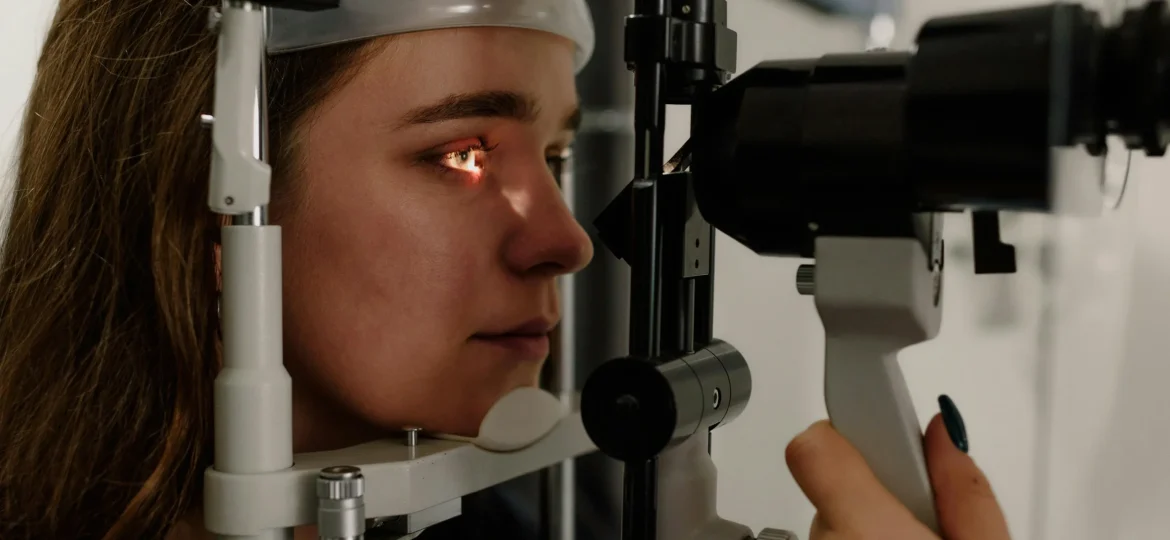
An eye doctor examines your vision and eye health, and several types of professionals provide care. Optometrists provide routine care, and ophthalmologists treat more advanced conditions. Since your eyes change over time, regular visits help track those shifts. This is what to expect at a standard appointment:
Medical History Review
Your appointment starts with questions about your health. The eye doctor asks about current medications, and they note any family history of eye disease. When you share past symptoms, the doctor gets a clearer picture of your needs. This step shapes the rest of your visit.
Be ready to talk about your daily habits. Screen time affects your eyes, and outdoor exposure matters too. The doctor also asks whether you wear glasses or contacts. Since these details connect to your vision, honest answers help the exam stay accurate.
Visual Acuity Test
The visual acuity test measures how clearly you see. You read letters from a chart, and each line gets smaller as you go. When needed, this test gives your doctor a baseline number for your sight. It takes only a few minutes.
You might cover one eye at a time during the reading. The doctor records each result, and they compare both eyes. If your vision falls below a set standard, further testing follows. Since clear numbers guide the next steps, this test comes early in the exam.
The visual acuity test is straightforward, and the appointment is typically quick. While it is simple, this test is helpful because it provides data that your doctor uses to determine the ideal course of action for your eye health. It helps identify any issues with clarity in your vision.
Various Checks
For some patients, several targeted checks follow the acuity test. Each one looks at a different function of your eyes. The doctor performs them in sequence, and the whole set moves quickly. Here are the main areas your doctor reviews:
- Side vision: You focus straight ahead while the doctor tests your peripheral range.
- Eye movement: You follow a moving object, and the doctor watches how your eyes track it.
- Eye pressure: A small device measures the fluid pressure inside each eye.
Elevated pressure indicates a glaucoma risk, and limited side vision signals other concerns.
Customized Treatment Plan
After the exam, your doctor builds a plan based on your results. The plan reflects your vision needs, and it addresses any conditions found. Since no two patients share the same eyes, each plan differs. You review the details together before you leave. Your plan might include one or more of the following:
- A new prescription for glasses
- A referral to a specialist
- A follow-up appointment for monitoring
- Guidance on daily eye care habits
The doctor explains each recommendation in plain terms. You ask questions, and they clarify anything unclear. When the plan involves medication, the doctor reviews how to use it. This conversation gives you a clear path forward.
Some plans also call for lifestyle adjustments. Reducing screen strain helps, and proper lighting supports your eyes. You decide which steps fit your routine. Since habits shape long-term eye health, the doctor may suggest small daily changes.
Schedule an Eye Doctor Visit
A standard eye exam covers your history, your vision, and the health of your eyes. Since eye conditions can develop quietly, regular checkups keep you informed. Book your appointment today to stay on top of your eye health; call your local eye clinic or request an appointment online. When you set a date now, you take a concrete step toward routine care.
