

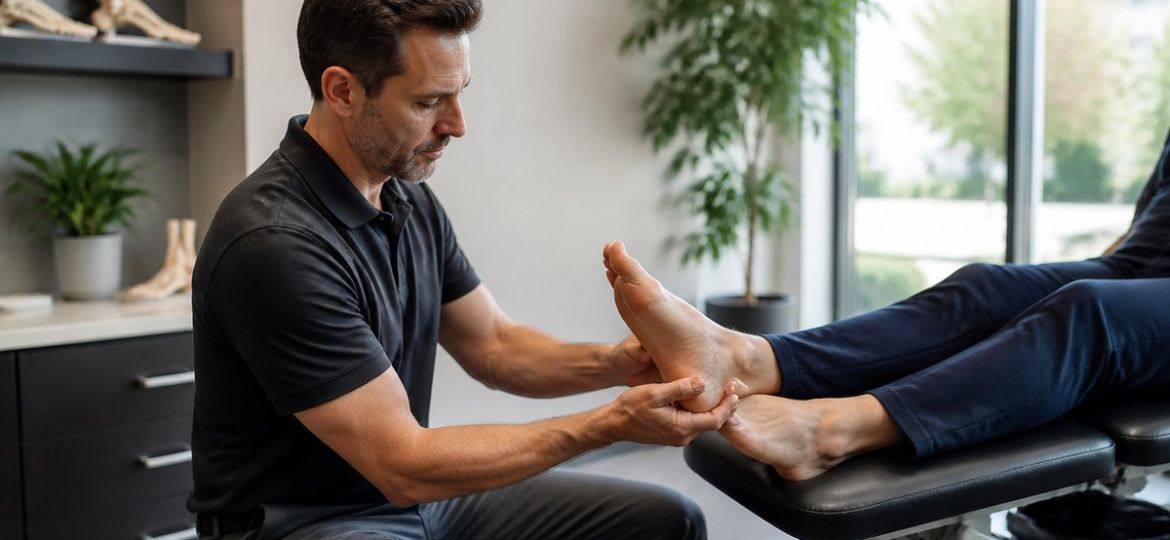
Foot pain changes how you walk, stand, and move through daily tasks. Small changes in alignment affect the rest of your body. Custom orthotics give your feet structured support, and they guide motion in a more natural pattern. When support matches your unique foot shape, pressure spreads more evenly, and irritated tissues get a chance to calm down. Learn the impact of custom orthotics on overall foot health.
Pain Management
Pain from flat feet, high arches, or past injuries can show up first in the heel. The ball of the foot is also affected. When the foot rolls too far inward or outward, tissues stretch and compress in ways they are not built to handle. Custom orthotics change how your foot meets the ground, reducing strain on irritated joints and soft tissue.
Targeted support under the arch or heel can ease tension in the plantar fascia, and that helps with aching first steps in the morning. A more stable heel position limits twisting through the ankle and midfoot. With every step guided into a healthier path, painful flare-ups tend to decrease over time.
Better Weight Distribution
If pressure concentrates on one area, skin, joints, and ligaments in that region work harder than they should. Custom orthotics add structure where your foot collapses and cushioning where impact feels sharp. Joints in the toes and midfoot then share the workload instead of one spot taking the brunt of each step. This balanced load can also reduce fatigue at the end of the day, and walking may feel more efficient.
Even weight distribution helps protect the ankle and knee as well, because the leg stacks more directly over the foot. When the base is stable, the rest of the limb does not need to compensate with awkward angles. That support helps you stay active with less discomfort, and it may delay joint irritation higher up the chain.
Balance and Posture Correction
The way your feet land affects alignment through your knees, hips, and spine. If one foot collapses more than the other, your body often leans or rotates slightly without you noticing. Custom orthotics create a level platform, and they guide your feet into a more symmetrical position.
Better alignment at the feet often leads to a steadier stance during standing tasks and longer walks. Small adjustments under the heel and arch change how your muscles fire to keep you upright. Over time, this support may help reduce wobbling on uneven surfaces and during quick direction changes.
Improved stability at the feet also takes pressure off muscles that work overtime to keep you balanced. When those muscles relax, you may feel less tightness in your calves, thighs, and lower back. The result is a posture that feels more natural, and that can make daily movement feel smoother.
Signs You Need Orthotics
Persistent discomfort is one of the clearest signals that your feet need extra support. Pain that returns day after day, especially after standing or walking, suggests that tissues are under repeated stress. Custom orthotics provide a way to change the forces causing that irritation instead of only masking symptoms.
- Ongoing heel or arch pain that lingers after rest
- Frequent calluses or corns in the same spots
- Shoes wearing down faster on one side
- Regular ankle rolling or a feeling of unsteadiness
When one part of the foot works harder than the rest, the skin and joints in that area reveal the problem. Orthotics aim to correct those patterns at the source, so your feet work as a coordinated unit again.
Get An Orthptics Consult
If you have pain in your feet, a professional orthotics consult will guide you to better foot health. During that visit, your gait, foot shape, and symptoms are reviewed in detail. With that information, you can discuss whether custom support would help protect your long-term foot health.
