

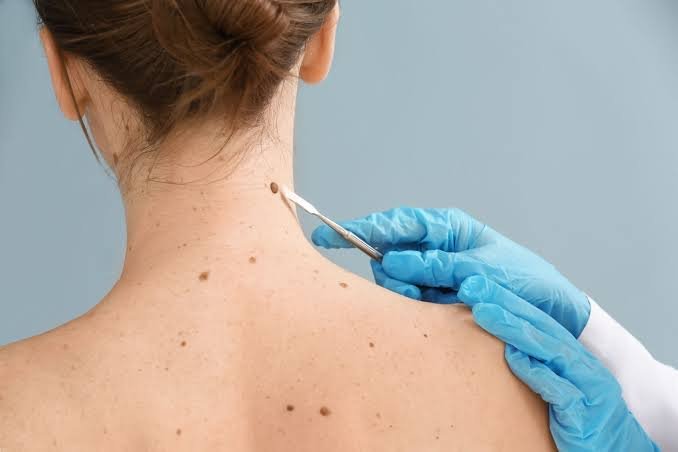
Skin cancer often develops after prolonged exposure to ultraviolet (UV) radiation from the sun or tanning beds, which damages the DNA inside skin cells. This damage can trigger mutations that allow cells to divide without stopping. Genetics, fair skin, a history of sunburns, and a weakened immune system can all also raise someone’s risk. Basal cell carcinoma is the most common form of skin cancer, and understanding how to recognize it can support earlier detection. Here’s more information on basal cell carcinoma:
How To Spot Skin Cancer
There are three main types of skin cancer, and each one appears differently on the body. Basal cell carcinoma typically shows up as a pearly or waxy bump, a flat flesh-colored or brown scar-like lesion, or a sore that bleeds, heals, and returns. It often develops on areas exposed to the sun, such as the:
- Face
- Neck
- Ears
Squamous cell carcinoma frequently presents as a firm, red nodule or a flat lesion with a scaly, crusted surface. Like basal cell types, it tends to appear on sun-exposed skin, but it can also form in scars or chronic sores.
Melanoma is the most serious type of skin cancer, and it can develop anywhere on the body. It may appear as a new dark spot or a change in an existing mole. Warning signs include asymmetry, irregular borders, multiple colors, a diameter larger than a pencil eraser, and changes over time.
How Basal Cell Carcinoma Is Diagnosed
To diagnose any form of skin cancer, a dermatologist will begin with a visual examination of the skin. If a lesion appears concerning, the next step is often a biopsy, in which a small sample of tissue is removed and sent to a laboratory for analysis. A pathologist examines the sample under a microscope to confirm whether cancer cells are present and to identify the type.
Skin cancer does not always cause noticeable symptoms in its early stages, which is why regular skin checks matter. Some people notice a bump or sore that will not heal, while others may experience itching, bleeding, or tenderness at the site. Because these signs can be subtle, many cases are found during routine skin examinations rather than because of discomfort.
How Skin Cancer Is Treated
Treatment depends on the individual and the location, size, and depth of the cancer. A dermatologist evaluates these factors alongside a person’s overall health and preferences before recommending an approach. Some common treatment options include topical medications, cryotherapy, curettage and electrodesiccation, radiation, and surgical removal.
For certain cases, Mohs surgery may be recommended, as it is often used for cancers on the face or other sensitive areas. During Mohs surgery, a surgeon removes thin layers of skin one at a time and examines each layer under a microscope. They repeat this process until no cancer cells remain.
This method has a 99% cure rate for basal cell carcinoma because it targets only the affected tissue, preserving as much healthy skin as possible. The precision of Mohs surgery makes it a common choice when appearance and tissue preservation are priorities. To minimize scarring and remove all detected cancer cells, this surgical method is best.
Get Regular Skin Checks
Recognizing the signs of skin cancer can support earlier detection and give you more options for care. Because basal cell carcinoma often develops slowly and may not cause obvious symptoms, pay attention to new or changing growths. Even if you don’t notice anything, scheduling regular skin examinations with a specialist can help identify concerns before they progress. If you notice any change in your skin, contact a skin cancer specialist for a consultation. A dermatologist can evaluate the area and discuss the appropriate next steps for your situation.
