

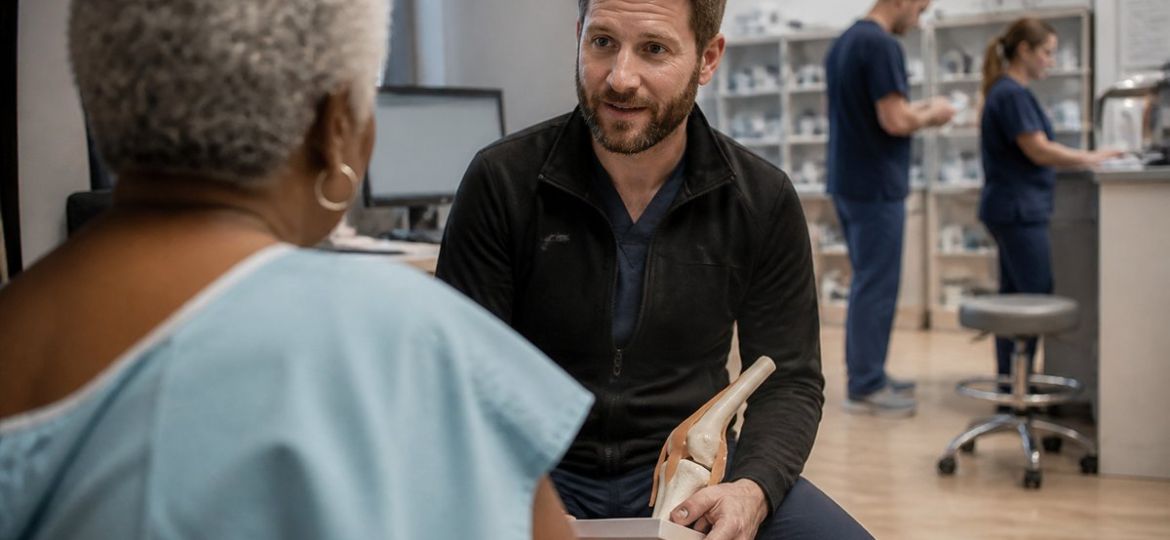
Orthopedic care focuses on managing conditions that affect the musculoskeletal system. If you notice persistent pain, stiffness, swelling, or reduced movement, visiting a bone and joint clinic can help clarify what is happening inside your body. Some people seek care after a sudden injury, while others schedule an appointment because everyday tasks, such as climbing stairs or lifting objects, have become uncomfortable. Here’s what to expect when visiting a bone and joint clinic so you can participate actively in your care:
Getting a Diagnosis
During your first visit to a bone and joint clinic, you meet with a provider who asks detailed questions about your symptoms, medical history, and daily activities. They review any previous imaging, including X-rays or MRIs, and then perform a hands-on examination to assess range of motion and joint stability. You might be asked to walk, bend, or perform simple movements so the orthopedic specialist can observe movements under stress. Diagnostic tests, including new imaging or lab work, are sometimes ordered to gather more information. Before you leave, the specialist explains their preliminary impressions, discusses next steps, and answers your questions. This helps you understand how the diagnostic process will move forward.
Getting an Arthroscopy
An arthroscopy is a minimally invasive procedure that allows a specialist to look inside a joint using a small camera. The camera is inserted through a tiny incision, and images are displayed, providing a clear view of internal structures. This approach uses smaller incisions than traditional open surgery, which leads to less tissue disruption. Arthroscopy is frequently used for joints such as the knee, shoulder, or ankle, where internal structures are difficult to evaluate with a physical exam alone. By seeing the joint from the inside, the provider gains a more precise understanding of what is causing your symptoms.
Because arthroscopy offers both visualization and access to the joint, it supports diagnosis and certain treatments at the same time. A specialist may use fine instruments through additional small incisions to remove loose fragments, smooth rough cartilage, or address damaged soft tissue. Some patients undergo arthroscopy after imaging suggests a problem that still needs direct confirmation, while others need this step when noninvasive approaches don’t provide enough information. Recovery experiences differ, but many individuals return home the same day with instructions for rest, gradual activity, and follow-up visits. The information gathered during arthroscopy guides long-term care plans.
Utilizing Physical Therapy
A physiotherapist evaluates how you move, identifies weak or tight areas, and designs exercises for joint stability and muscle balance. Physical therapy is frequently recommended for musculoskeletal conditions because it focuses on restoring function through targeted movement and education. Sessions include personalized methods on:
- Stretching Techniques
- Strengthening Exercises
- Posture Training
- Strain-reducing Techniques
Many patients receive home programs that extend the benefits of in-clinic sessions and encourage steady progress. By addressing movement patterns, physical therapy supports joint health, reduces stress on healing tissues, and helps people resume daily activities.
Contact a Bone and Joint Clinic
To prepare for your first visit to a joint clinic, start by gathering key medical information. Write down your symptoms, including when they began, what worsens them, and what brings relief, to share a clear timeline. Wear or bring clothing that allows easy access to the affected area, such as shorts for a knee evaluation or a sleeveless top for a shoulder assessment. Plan to arrive early to complete paperwork and verify insurance details.
Bring a list of medications, supplements, and previous treatments, along with copies of any recent related imaging or reports. Before your appointment, think through specific questions about your activity goals and any concerns about procedures or rehabilitation. With this preparation, you enter the visit ready to partner with a specialist and make the most of your time. To get personalized care for your musculoskeletal needs, schedule a consultation with an orthopedic clinic near you.
