

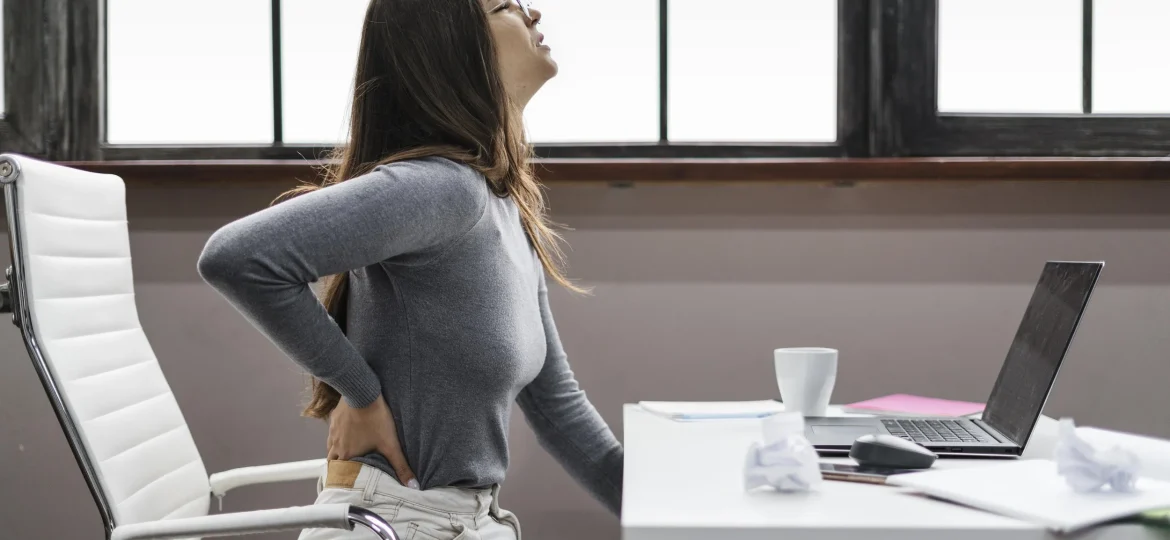
Lower back pain is discomfort or stiffness affecting the area between the ribs and hips. It may result from prolonged sitting, poor posture, repetitive movements, or lifting heavy objects at work. Here are some practical tips for managing pain in the lower back at work:
Improve Your Workstation Setup
Your physical workspace affects how your body feels after hours of sitting, so small changes to your setup can reduce lower back pain. Adjust the following elements to build a more supportive station:
- Chair height and depth: Set your chair so your feet rest flat on the floor and your knees sit level with your hips.
- Lumbar support: Add a cushion or use a chair with a built-in curve that fills the gap between your lower back and the seat.
- Monitor position: A well-placed monitor keeps you from leaning forward, which shifts weight onto your lower back.
- Keyboard and mouse placement: Keep both close enough that your elbows stay bent.
- Desk clearance: Clear the space under your desk so you can position your legs comfortably; a clear area lets you shift positions freely to ease stiffness.
Maintain a Supportive Posture
Posture plays a key role in how your lower back handles a full workday. Sit with your back against the chair, your shoulders relaxed, and your head balanced over your spine. When you slouch, your lower back absorbs extra load, so a level, upright position spreads weight more evenly. You can check your alignment every hour by resetting your shoulders and drawing your chin slightly back.
Good posture is not a single fixed pose, and holding one position for too long can still create tension and cause lower back pain. Vary your sitting position throughout the day, and let your body move within a supported range. If you use a standing desk, keep your weight balanced on both feet, and avoid locking your knees while you stand.
Move Throughout the Workday
Staying in one position for hours tightens the muscles around your lower back, so regular movement helps keep them loose. Build the following breaks into your schedule:
- Stand and stretch: Rise from your chair and reach gently toward the ceiling.
- Take short walks: Walking increases circulation, and steady blood flow supports muscle recovery.
- Do seated stretches: Rotate your torso slowly or roll your shoulders while seated.
- Alternate sitting and standing: Switch positions during long stretches of focused work.
- Set reminders: Use a timer or app to prompt movement breaks.
Handle Work Tasks Safely
Physical tasks at work can place sudden pressure on your lower back, and careless movement often makes existing pain worse. When you lift an object, bend at your knees rather than your waist, and keep the item close to your body as you rise. Twisting while you carry a load strains your spine, so turn with your feet rather than twisting your back. For heavy or awkward items, ask for help or use equipment, because lifting alone increases your risk.
Repetitive tasks also affect your lower back, even when they are light. Keep frequently used items within easy reach, so you avoid stretching or twisting many times a day. When a task requires you to hold a position, take short pauses to reset, and shift your weight between movements.
Address Your Lower Back Pain Today
Managing lower back pain at work comes down to a few supportive steps. These include a supportive workplace setup, mindful posture, regular movement, and safe handling of tasks. Start with one change, then add others as they become routine, and speak with a qualified professional if your pain persists or worsens. To address your lower back pain with expert help, contact a qualified pain management specialist near you to schedule your appointment today.
